
How to Style Antique Objects in Modern Interiors
Introduction
A thoughtfully chosen antique object has the remarkable ability to transform an interior without overwhelming it. A single nineteenth-century painting, a hand-thrown ceramic vessel, or a beautifully worn leather-bound book can introduce warmth, authenticity, and quiet character that contemporary furnishings alone often struggle to achieve.
Many people assume that antiques belong only in traditional homes filled with ornate furniture and period decoration. In reality, some of the most compelling interiors today are those that confidently combine old and new. Clean architectural lines, restrained color palettes, and modern materials often provide the perfect backdrop for objects that carry history and craftsmanship.
This approach is not about recreating the past or turning a home into a museum. Instead, it is about creating balance. Antique objects offer texture where modern interiors can feel smooth, individuality where mass-produced furnishings may appear repetitive, and a sense of permanence in spaces that might otherwise feel temporary.
Professional interior designers frequently rely on this contrast. Rather than filling rooms with numerous decorative pieces, they often choose only a handful of carefully selected antiques to become natural focal points. Their age becomes an advantage, adding visual depth while encouraging a slower appreciation of the surrounding space.
Whether the object is a landscape painting, a bronze sculpture, an antique mirror, or a collection of historic books, its greatest contribution often lies beyond decoration. Each piece introduces craftsmanship, material quality, and a connection to generations of makers whose work continues to enrich contemporary homes.
Why Antiques Still Belong in Modern Homes
Modern interiors are often celebrated for their simplicity, functionality, and clean lines. Yet even the most carefully designed contemporary spaces can sometimes feel impersonal. Antique objects introduce an element that cannot be manufactured: authenticity shaped by time.
Unlike newly produced decorative accessories, genuine antiques carry visible traces of their history. The soft patina on bronze, the gentle wear of polished wood, the subtle irregularities of hand-crafted ceramics, or the aged texture of original oil paintings all contribute to a sense of depth that modern production rarely replicates convincingly.
These qualities also create visual balance. Contemporary architecture frequently emphasizes smooth surfaces, neutral colors, and minimal ornamentation. Antique objects provide contrast through their rich materials, intricate craftsmanship, and naturally developed character. Rather than competing with modern design, they often enhance it by introducing texture and complexity.
Perhaps most importantly, antiques help create interiors that feel personal rather than staged. While many contemporary furnishings are widely available, carefully selected historical pieces reflect individual taste and curiosity. They suggest that a home has evolved over time instead of being assembled all at once from a single showroom.
This timeless quality explains why antique objects continue to appear in many of today's most admired interiors. Their appeal extends beyond decoration; they bring stories, craftsmanship, and cultural continuity into spaces designed for modern living.

A single antique painting often becomes the defining focal point of a contemporary living space.
The Power of Contrast
One of the most successful principles in contemporary interior design is the thoughtful contrast between old and new. Rather than treating antiques and modern furnishings as opposing styles, experienced designers often see them as complementary elements that strengthen one another.
A sleek contemporary sofa can become significantly more interesting when paired with a nineteenth-century landscape painting. A minimalist console table gains warmth beneath an antique mirror, while handcrafted ceramics introduce subtle irregularity among clean architectural lines. These combinations create visual tension in the most positive sense, allowing each object to stand out without dominating the room.
Contrast also helps establish hierarchy. When most furnishings remain understated, a carefully chosen antique naturally becomes the focal point. The eye is drawn not because the object is excessively ornate, but because its craftsmanship, materials, and history distinguish it from its surroundings.
Successful interiors rarely rely on perfect stylistic consistency. Instead, they achieve harmony through proportion, balance, and restraint. Antique objects contribute precisely because they are different. Their presence introduces character without disrupting the overall calm of a contemporary space.
For this reason, decorating with antiques is less about following historical styles and more about creating meaningful relationships between objects from different periods. When chosen thoughtfully, these relationships give interiors a sense of permanence that purely modern decoration often struggles to achieve.

Combining a small selection of authentic antiques creates depth, personality and visual balance.
Choosing the Right Antique Pieces
For those beginning to incorporate antiques into a contemporary home, selecting the right objects is often more important than selecting many of them. A carefully chosen piece with strong craftsmanship and visual presence can have a greater impact than an entire room filled with decorative accessories.
Paintings are often among the easiest antiques to introduce. Learn how to identify original antique oil paintings before choosing one for your collection. An original landscape, portrait, or still life can immediately establish a focal point while adding color, texture, and historical character. When paired with a thoughtfully chosen 19th-century European frame, the artwork becomes more than decoration—it becomes an architectural feature within the room.
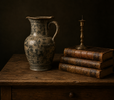
Antique books offer another versatile option. Displayed on shelves, coffee tables, or consoles, they introduce warmth through aged leather, handmade paper, and subtle variations in color. Beyond their decorative qualities, they invite curiosity and encourage a more personal relationship with the space.
Ceramic vessels, bronze sculptures, clocks, mirrors, and carefully selected decorative objects can also enrich contemporary interiors. Their handcrafted surfaces and natural patina provide visual complexity that contrasts beautifully with modern materials such as glass, steel, or polished stone.
Rather than searching for objects that perfectly match one another, it is often more successful to select pieces that share a similar level of quality. Different periods, materials, and origins can coexist harmoniously when united by craftsmanship, authenticity, and thoughtful placement.

Layering objects of different materials and periods creates interiors with quiet elegance and lasting character.
Creating Balance Without Clutter
One of the most common misconceptions about decorating with antiques is that more objects automatically create greater character. In reality, the opposite is often true. Carefully edited interiors tend to feel more refined because each object has the opportunity to be appreciated individually.
Balance begins with restraint. Instead of filling every available surface, consider allowing antiques to occupy only a few carefully chosen locations within the room. Empty space is not wasted space; it gives historical objects room to breathe and encourages the eye to notice their details.
Scale is equally important. A substantial painting may naturally anchor a wall, while a smaller bronze sculpture or ceramic vessel can create interest on a console or side table. Mixing different sizes prevents visual monotony and helps establish a comfortable rhythm throughout the interior.
Lighting also plays a significant role. Natural daylight reveals texture, patina, and subtle variations in materials that artificial lighting often flattens. During the evening, warm and carefully directed illumination can enhance the depth of carved wood, gilded frames, aged leather, and polished bronze without overwhelming the overall atmosphere.
Perhaps the most effective interiors are those that feel collected rather than decorated. Objects appear to have found their place naturally over time, each contributing to the room without competing for attention. This quiet confidence is often what distinguishes timeless interiors from those built around short-lived trends.
Room-by-Room Inspiration
While the principles of balance and restraint remain consistent throughout the home, each room offers unique opportunities for introducing antique objects. The goal is not to recreate a historical interior but to allow carefully selected pieces to enrich everyday living.
Living Room
The living room is often the ideal place to introduce a statement piece. An antique landscape painting above a fireplace, a bronze sculpture displayed on a console, or a carefully chosen ceramic vessel can immediately establish character without overwhelming the space. Modern seating and simple architectural lines provide a calm backdrop that allows historical objects to stand out naturally.
Dining Room
Dining rooms benefit from antiques that encourage conversation and atmosphere. A nineteenth-century mirror can reflect natural light while adding depth to the room, and handcrafted ceramics or decorative centerpieces introduce texture without competing with the table itself. Antique objects often feel most successful when they contribute to the experience of gathering rather than becoming purely ornamental.
Bedroom
Bedrooms call for a quieter approach. A small antique painting, an elegant mirror, or a pair of historic bedside objects can add warmth while preserving a restful atmosphere. Rich materials such as aged wood, bronze, or leather complement soft fabrics and neutral colors, creating interiors that feel calm and timeless.

Antique objects introduce warmth and individuality while preserving the calm atmosphere of a modern workspace.
Home Office
A study or home office naturally lends itself to antique objects associated with learning and craftsmanship. Leather-bound books, framed artwork, antique desk accessories, or a carefully restored clock reinforce an atmosphere of focus and permanence. These objects often make the workspace feel more personal while reflecting an appreciation for history and quality.
Entrance Hall
The entrance sets expectations for the entire home. A single antique console table, a well-proportioned mirror, or an original painting can create a memorable first impression without requiring elaborate decoration. Even one carefully selected object is often enough to establish the tone that continues throughout the interior.
Common Mistakes When Decorating with Antiques
Many interiors fail not because of the antiques themselves, but because of the way they are arranged. Understanding a few common mistakes can help create spaces that feel intentional rather than overcrowded.
One of the most frequent errors is trying to display too many antique objects at once. When every shelf and surface is filled, individual pieces lose their visual importance. Allowing space between objects gives each one the opportunity to be appreciated.
Another common mistake is attempting to match everything by period or style. Perfect historical consistency is rarely necessary in a contemporary home. In many cases, thoughtfully combining objects from different centuries creates a more natural and collected appearance than assembling a room devoted entirely to one historical period.
Lighting is often overlooked as well. Even exceptional antiques can appear flat or lifeless when placed in poorly illuminated corners. Natural daylight and carefully planned evening lighting reveal texture, craftsmanship, and the subtle beauty of aged materials.
Finally, it is worth resisting the temptation to imitate historical interiors too literally. Contemporary homes benefit most when antiques serve as carefully chosen accents rather than dominating every aspect of the design. Their purpose is to enrich modern living, not to recreate the past in its entirety.
Why Quality Always Outweighs Quantity
One exceptional antique object can influence an interior far more profoundly than dozens of ordinary decorative accessories. Quality naturally attracts attention through craftsmanship, authenticity, and the quiet confidence that develops over decades—or even centuries.
This principle explains why experienced collectors and interior designers often acquire objects gradually. Each addition is selected with care, allowing the home to evolve over time instead of being completed in a single purchase. The resulting interiors feel personal, layered, and authentic because every object has earned its place.
Authentic antiques also reward close observation. The patina of bronze, the depth of an original oil painting, the character of hand-carved wood, or the subtle imperfections of handmade ceramics cannot be fully reproduced through modern manufacturing. These qualities become more noticeable the longer one lives with them, enriching the experience of everyday life.
Ultimately, decorating with antiques is not about filling a room with historical objects. It is about creating an environment where craftsmanship, history, and contemporary living coexist in quiet harmony. When quality guides every decision, even the simplest interior can develop a timeless elegance that remains meaningful for years to come.

Timeless interiors are built through thoughtful curation rather than the number of objects displayed.
Conclusion
Styling antique objects in modern interiors is ultimately an exercise in balance rather than decoration. The most memorable spaces are rarely those filled with countless historical pieces, but those where a small number of carefully chosen objects are given the opportunity to speak for themselves.
Authentic antiques introduce qualities that modern manufacturing cannot easily reproduce. Their craftsmanship, natural patina, and enduring materials add depth, individuality, and a sense of continuity that enrich contemporary living. When thoughtfully combined with clean architectural lines and restrained interiors, these objects create spaces that feel collected rather than designed, timeless rather than fashionable.
Perhaps this is why antiques continue to appeal across generations. They remind us that beautiful interiors are not defined by trends alone, but by meaningful objects that carry history, craftsmanship, and lasting character. Whether displayed as a single focal point or incorporated gradually over time, well-chosen antiques have the ability to transform a house into a home with a unique and enduring identity.
Discover Timeless Pieces for Your Interior
If this article has inspired you to introduce authentic antiques into your own home, we invite you to explore the carefully curated collections at Salon Antique. From original European oil paintings and antique books to decorative objects, mirrors, ceramics, and historic works of craftsmanship, each piece is selected for its authenticity, quality, and timeless appeal.
Whether you are searching for a single statement object or gradually building a thoughtfully collected interior, our collections offer inspiration for creating spaces that combine history with contemporary living. Explore our latest arrivals to discover newly curated European antiques and works of art.


